
Collision Repair
Car bumper damage after a collision might look minor at first glance, but appearances can be deceiving. What may seem like a small crack, dent, or scuff could actually hide structural or safety issues beneath the surface. That’s why deciding between car bumper damage repair and replacement isn’t always as simple as it seems.
Before choosing a fix, it’s worth knowing what many drivers overlook. The more informed you are of what could be hiding behind that damaged panel, the more confidently you can decide which action to take.
Modern Bumpers Aren’t Just Plastic
You are involved in a minor collision, and your modern vehicle’s bumper has a small crack or scratch. It’s just plastic, nothing major, so you decide not to proceed with car bumper replacement. You might not even prioritize a repair right away.
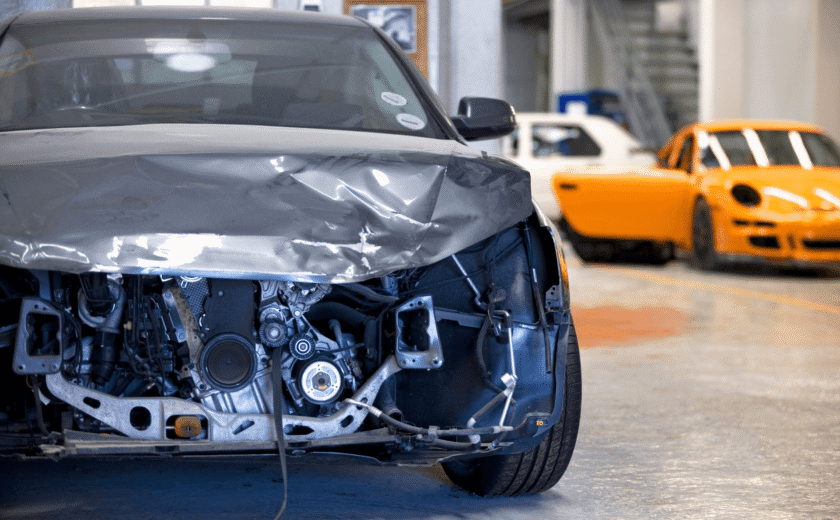
But modern bumpers aren’t just plastic. The plastic bumper cover is just what you see. Behind it is energy-absorbing foam, a steel or aluminum reinforcement bar, mounting brackets, and even impact sensors.
The more modern your vehicle, the more important things can be hidden beneath that simple plastic bumper. For example, if your vehicle has an advanced driver-assistance system, the bumper can store parking sensors, blind-spot monitoring hardware, and adaptive cruise control radar units.
When Car Bumper Damage Repair Makes Sense
You’ll be pleased to know that you won’t always need to invest in a car bumper replacement after being involved in a collision. Repairs are typically appropriate when:
- A trusted technician confirms that the scuffs, small cracks, or scratches are cosmetic
- The reinforcement bar is still intact
- The mounting points aren’t broken
- The sensors and electronics remain undamaged
Compared with bumper replacement, car bumper damage repair is typically less expensive, faster, and better suited to minor impacts. When you take your vehicle to a trusted local body shop, they can fill and reshape the plastic, sand and paint it, and recalibrate any sensors as required.
When to Request Car Bumper Replacement
There’s often a fine line between car bumper damage that can be repaired and when the entire bumper should be replaced. Experienced automotive repair technicians can advise on the most appropriate option. However, most will say that it’s a good idea to request car bumper replacement in these situations:
- The bumper has deep cracks or large splits
- It’s torn or deformed
- The mounting points are broken
- The reinforcement bar is bent or damaged in another way
- The safety sensors were displaced or damaged
If your vehicle has ADAS features and you require a car bumper replacement, your chosen body shop may need to replace and recalibrate certain components.
What Most Drivers Miss
If you’re not an automotive repair professional, it’s only natural that you won’t understand everything there is to know about bumper repair and replacement. Many drivers miss the following things after sustaining damage to their bumpers:
Hidden Structural Damage
Even if the bumper cover looks fine, that doesn’t mean that the whole bumper is. The internal reinforcement bar could be bent! Even a slight weakness can be enough to prevent your vehicle from absorbing impact in a future accident.
Sensor Misalignment
Even a slight bump can displace the sensors hidden behind it. Sensor misalignment can have a considerable impact on your driving experience, including:
- Parking assist accuracy
- Adaptive cruise performance
- Automatic emergency braking systems
To address this issue or rule out any problems, speak with your trusted local body shop about performing a post-repair scan and calibration.
Insurance Troubles
Both insurance companies and drivers regularly wish to keep costs low when requesting repairs. However, replacing the car bumper is always the best option when safety is compromised. If your insurance company has opted for replacement, be mindful that using non-OEM parts may affect fit and sensor alignment.
DIY Fixes That Backfire
Don’t want to take your vehicle to a repair shop for bumper damage? A DIY fix can seem like a good idea, but it rarely is. Using glue, touch-up paint, heat reshaping, and other DIY methods may void the warranty, interfere with bumper sensors, and reduce the car’s resale value.
Steps to Take After Experiencing Car Bumper Damage
Whether the bumper damage is light or major, you should take these steps for peace of mind and the safety of yourself and your passengers on the road:
1. Schedule a full inspection from a highly regarded body shop in your area
2. Request a scan for electronic system faults
3. Ask for more information about recalibration and whether it’s included
4. Confirm whether parts are OEM or aftermarket
5. Consider long-term safety over short-term savings
Request Car Bumper Damage Repair or Replacement from Mr. Car Shine Body Shop in Garland, TX
Whether you know you only need a bumper repair or want to learn whether a car bumper replacement is required, contact the friendly team at Mr. Car Shine Body Shop in the Dallas-Fort Worth area.
Our experienced automotive technicians will perform a thorough inspection of your vehicle and recommend the most appropriate service to ensure your peace of mind. Request a free, no-obligation quote today!